
Why mobile service is reshaping customer behavior in fixed operations
How Mobile Service Is Changing Customer Behavior in Fixed Operations
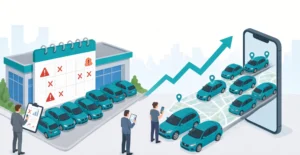
Mobile service is often discussed as a convenience feature, but its real impact goes much deeper. Beyond expanding capacity or reducing facility constraints, mobile service is actively reshaping customer behavior in dealership fixed operations. How customers schedule service, approve work, and return for future visits is changing, and the data behind mobile service adoption helps explain why.
Mobile service changes how customers schedule appointments
Traditional dealership service models rely heavily on customer availability. Customers must align their schedules around drop-offs, transportation, and pickups. Mobile service removes those constraints, and that flexibility directly affects scheduling behavior.
Industry research shows that nearly 40 percent of dealership service appointments are scheduled outside of traditional business hours, often late at night or early in the morning. Mobile service captures more of this demand by offering appointment types that fit into customers’ daily routines rather than forcing schedule adjustments.
Dealerships offering mobile service often see higher appointment conversion rates, particularly for maintenance visits that are frequently delayed or skipped. When customers can choose service at home or work, hesitation drops and follow-through increases.
Approval rates improve when friction is removed
Mobile service also influences how customers respond to recommended work. Studies across fixed operations show that customers are more likely to approve maintenance and light repair recommendations when service feels simple and predictable.
Data indicates that customers receiving service outside the dealership environment approve recommended work at rates 5 to 10 percent higher than comparable in-store visits. Reduced time pressure and fewer logistical distractions allow customers to focus on the service itself rather than transportation concerns.
Mobile service appointments also tend to be shorter and more focused. With fewer overlapping interactions, communication is clearer and trust improves.
Retention patterns shift with mobile-first customers
Retention is one of the strongest indicators of fixed operations success. Mobile service has a measurable impact here as well. Customer surveys show that over 65 percent of customers who use mobile service once say they are more likely to return to the same dealership for future service.
Mobile service users also tend to schedule service more consistently. Maintenance intervals shorten, and skipped visits decline. This behavior is especially common among customers managing work schedules, families, or multiple vehicles.
For dealerships, this creates a more predictable service pipeline and a stronger long-term customer relationship.
Mobile service reduces service avoidance behavior
Service avoidance is a persistent challenge. Many customers delay or avoid service due to inconvenience rather than cost. Research indicates that between 20 and 30 percent of deferred service visits are driven primarily by time and transportation constraints, not dissatisfaction with the dealership.
Mobile service directly addresses these barriers. By eliminating travel, waiting rooms, and shuttle coordination, dealerships remove the most common reasons customers postpone service.
As a result, mobile service programs often show lower cancellation and no-show rates, particularly for routine maintenance and recall work.
Data-driven mobile service becomes a strategic advantage
Mobile service is no longer experimental. It is producing measurable changes in customer behavior, approval rates, and retention. The dealerships seeing the strongest results treat mobile service as part of their broader service strategy, not as a standalone offering.
Platforms like Connexion Mobility help dealerships coordinate mobile service alongside in-store operations by providing visibility, scheduling support, and operational alignment. When mobile service data is tracked and optimized, dealerships gain insight into customer behavior patterns that traditional service models often miss.
As customer expectations continue to evolve, mobile service is becoming a behavioral differentiator. Dealerships that understand how it influences scheduling, approvals, and loyalty are better positioned to grow fixed operations in a changing service landscape.