
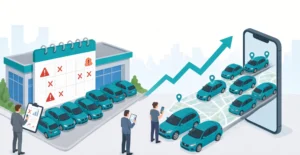
The False Confidence of Manual Insurance Verification in Dealerships
Why visual insurance checks are creating hidden liability exposure
In many dealership service lanes, insurance verification feels straightforward. An advisor reviews an insurance card, confirms the expiration date, and moves forward with the loaner or transportation transaction.
The process feels controlled. The documentation looks legitimate. The moment passes quickly.
But visual confirmation does not equal real-time verification.
As dealership transportation programs expand, manual insurance checks are creating a false sense of security, one that carries measurable financial risk.
The Insurance Card Gap
An insurance card confirms that a policy was issued. It does not confirm:
- That the policy is active today
- That coverage limits meet dealership requirements
- That the policy has not been canceled for non-payment
- That the named insured aligns with the driver
According to industry data, roughly 12–14 percent of drivers nationwide are uninsured. Beyond that, a meaningful percentage carry policies that lapse temporarily due to billing issues, coverage adjustments, or administrative changes.
Estimates suggest that 8–15 percent of policies presented during manual checks may not reflect current, valid coverage at the time of review.
In high-volume service operations, statistical exposure increases with transaction count.
Volume Magnifies Risk
Consider a dealership handling:
- 30 transportation-related transactions per day
- 250 operating days annually
That equals 7,500 annual insurance verification events.
If even 10 percent of those cases involve questionable or insufficient coverage:
- 750 transactions annually carry elevated exposure risk
Even if only a fraction of those cases result in incidents, the financial implications are significant.
Moderate accident claims involving bodily injury or property damage frequently range from $40,000 to $100,000, not including administrative burden or reputational impact.
Insurance verification failures are rare — but when they occur, they are costly.
Operational Friction Adds Up
Manual insurance verification also impacts workflow.
Service advisors typically spend 3–6 minutes per transaction reviewing documentation and logging compliance details. Across 30 transactions daily, that equates to:
- 90 to 180 minutes per day
- 375 to 750 hours annually
At a fully burdened labor rate of $35 per hour, that represents:
- $13,000 to $26,000 per year in administrative handling
Manual diligence consumes time while still leaving verification gaps.
Real-Time Verification Changes the Equation
Connexion Mobility integrates with Modives through CheckMy Driver to provide real-time insurance verification.
Instead of relying on static documents, dealerships receive confirmation that:
- Coverage is active
- Coverage meets defined standards
- The policy information is current
Verification becomes data-driven rather than document-based.
This reduces the probability of uncovered incidents while improving workflow consistency. Advisors spend less time managing paperwork, and dealerships gain documented confirmation at the time of vehicle release.
The Strategic Perspective
Transportation programs are becoming more complex, combining loaners, rentals, shuttles, and on-demand options. As these programs scale, verification volume increases.
Manual systems do not scale cleanly.
Automated insurance checking provides:
- Consistent enforcement of coverage standards
- Reduced liability exposure
- Improved audit readiness
- Lower administrative burden
In a high-volume service environment, verification must be both fast and accurate.
The Bottom Line
Manual insurance checks feel safe because they are familiar. But familiarity does not equal protection.
As vehicle values rise and transportation programs grow, the cost of a single uncovered incident can outweigh years of administrative savings.
Real-time insurance verification shifts dealerships from reactive documentation to proactive risk control.
In today’s environment, that shift is not optional, it is strategic.